Flushing, cleaning and filling glycol systems: how to do it properly
- Posted on
- By Huchem UK
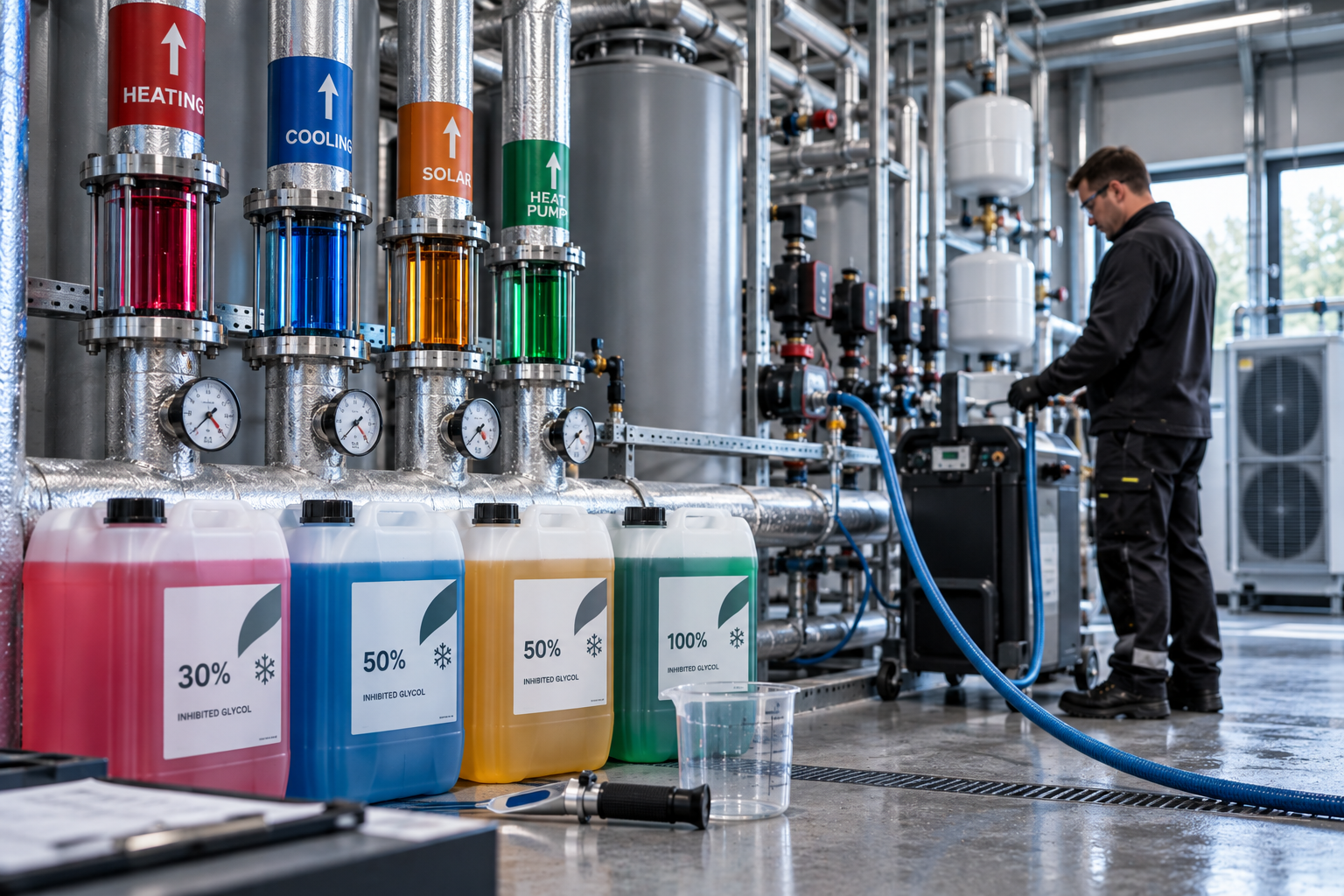
A glycol system only performs well if it is filled correctly. Old fluid, tap water and dirt shorten the life of pumps and heat exchangers. This step by step guide explains how to flush, clean and refill a heating or cooling system with inhibited glycol.
Glycol, either ethylene or propylene glycol, is used as the heat and cold transfer fluid in a wide range of technical installations: heating systems, heat pumps, solar thermal collectors, air conditioning, industrial process cooling, cold stores and district heating and cooling networks. Whether you are commissioning a new system or servicing an existing one, filling it properly makes all the difference to reliability and energy efficiency.
Why glycol is essential
- Lowers the freezing point (a 50% mixture protects to around -33 °C).
- Protects against corrosion, rust and scale when properly inhibited.
- Inhibits the growth of bacteria and algae.
- Improves the reliability and efficiency of the installation.
Huchem supplies only inhibited glycol (30%, 40%, 50% or 100%) with high quality additives that protect steel, copper and aluminium and considerably extend the lifespan of the system.
Why always use demineralised water
Tap water contains minerals and salts that cause corrosion and blockages. Demineralised water prevents this and keeps the system stable and reliable. It prevents scale and corrosion, allows the inhibitors to work as intended and extends the life of pumps, pipework and heat exchangers. Use it for flushing as well as for diluting 100% glycol.
New installations
- Flush with demineralised water. Installation debris, flux, swarf and oil residues must be removed before the glycol goes in. Circulate clean water through the system and drain it.
- Filter while filling. Fill through a filter unit so that any remaining particles are caught before they reach the pump or heat exchanger.
- Fill with inhibited glycol in the correct ratio. Use a ready mixed 30%, 40% or 50% glycol, or mix 100% glycol with demineralised water. Check the final concentration with a refractometer.
Existing installations
- Drain and flush thoroughly. Remove the old glycol, dirt, sludge and bacterial growth. Flush with demineralised water until it runs clear. Heavily fouled systems may need a system cleaner before flushing.
- Check pH and conductivity. The pH of the flushing water should be neutral and the conductivity low before you refill. High conductivity means salts or old inhibitors are still present.
- Refill with fresh inhibited glycol. Never top up old glycol with a different brand or type. Mixing inhibitor packages can cause deposits that block filters and reduce flow.
- Vent and check. Bleed the system, check the pressure and check for leaks. Note the concentration, the date and the product used in your maintenance records.
Disposing of old glycol
Used glycol is hazardous waste and must never be poured down the drain or onto the ground. Collect it in suitable containers and have it removed by a licensed waste contractor. Keep the waste transfer documentation.
Typical applications
Central heating, underfloor heating and heat pumps; air conditioning and refrigeration; solar thermal systems; industrial process cooling and data centres; district heating and cooling networks; sprinkler systems and catering refrigeration.
Products from stock
Huchem supplies inhibited ethylene glycol and propylene glycol in 20 litre cans in 30%, 40%, 50% and 100%. Larger volumes, demineralised water and technical advice are available on request. Send us your system details (type of installation, volume and required frost protection) and we will recommend the right products.