Removing fuel oil and oil stains: how to tackle them with a cold degreaser
- Posted on
- By Huchem UK
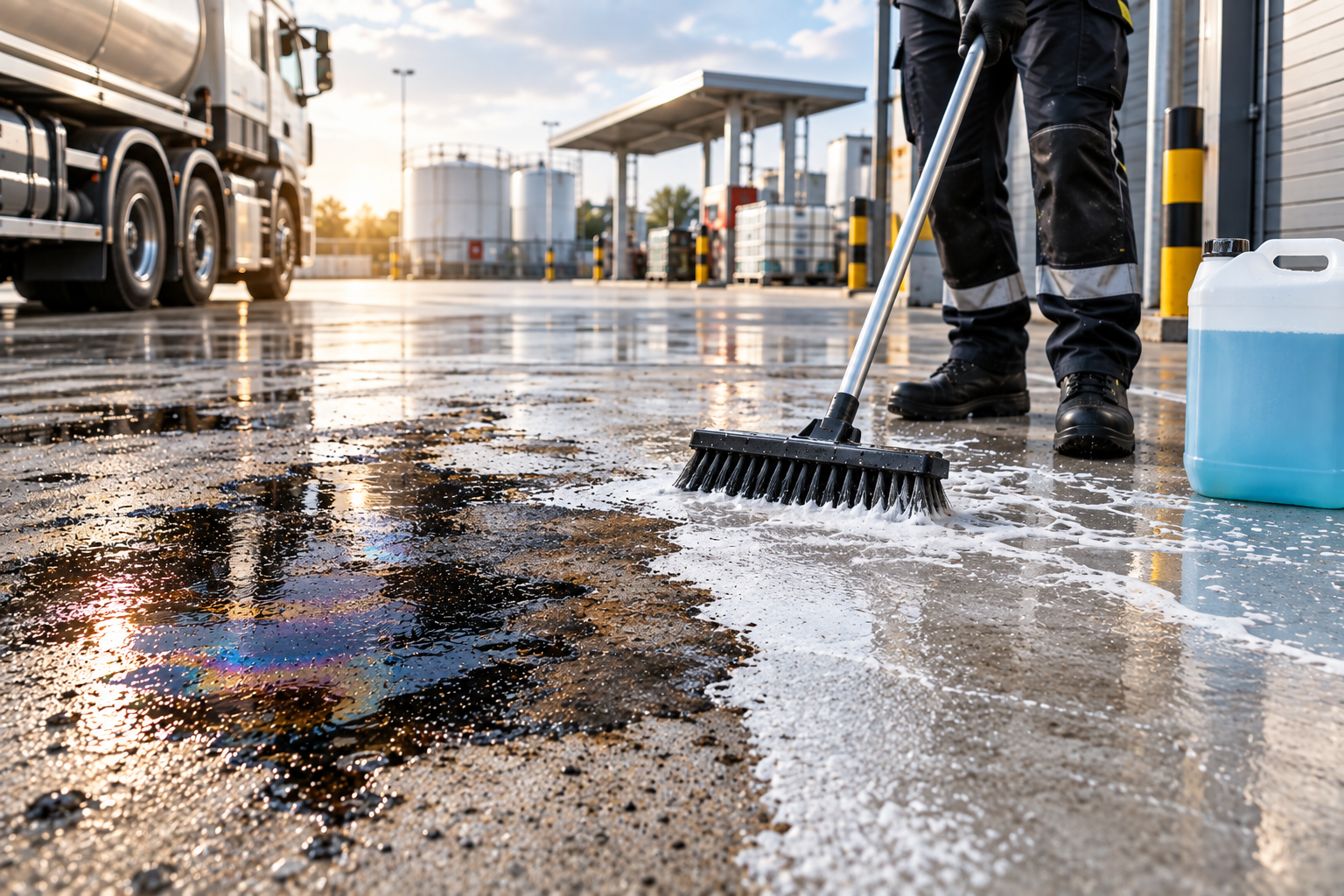
Fuel oil, diesel and engine oil stains are removed by dissolving the oil with a cold degreaser: apply undiluted, let it work briefly and rinse with water. On concrete the stain sinks into the pores, so a second treatment is often needed. Here is the step by step method.
Fuel oil, diesel, hydraulic oil and engine oil are mineral oils. On smooth surfaces they come off relatively easily, but on concrete the oil sinks deep into the pores, and a normal clean is rarely enough. In this article we explain how to remove stubborn oil stains from floors, tanks and parts with a cold degreaser, without overloading your oil separator.
What is a cold degreaser and how does it work?
A cold degreaser is a cleaner that dissolves grease and oil without having to be heated. It dissolves mineral oils and greases by mixing with them and lifting them off the surface. It breaks down the sticky layer that bonds the dirt to the substrate and works on almost every kind of oily contamination. Fresh stains usually need one treatment; oil that has soaked in for years often needs a longer contact time or a second round.
The surfactants in the Huchem Oil & Fuel Oil Remover and Cold Degreaser are more than 90% biodegradable according to the OECD test method.
A word about oil separators
Workshops and industrial sites with a drain to the sewer are required to have an oil separator. Degreasers differ in how they behave with water: some form a stable emulsion, so the released oil mixes finely with the rinse water instead of floating on top, which can overload the separator. A blocked separator means downtime, fines and expensive replacement. Always rinse towards the separator, never directly to the sewer or surface water, and check the product data sheet if you are unsure.
Why you should act quickly
Unsealed concrete is porous. Oil sinks in fast and bonds to the pores, and the longer a stain sits, the deeper it goes and the harder it becomes through oxidation. Fresh stains still react quickly to a degreaser; old stains need more time and sometimes a second treatment. The sooner you act, the better, but even old stains can be removed with the right product.
Step by step
- Absorb loose oil first. Pick up any liquid oil with absorbent granules or a cloth, so the degreaser works on the stain itself and not on a layer of loose oil.
- Apply undiluted. Use a cloth, brush or a parts washer tank, depending on the degree of contamination and how absorbent the surface is.
- Dilute for pressure washing. If you use high pressure equipment, dilute according to the label and apply evenly.
- Let it work. Fresh stains need only a short contact time. On old, deeply soaked concrete allow longer and scrub with a stiff brush in between, so the product penetrates the pores.
- Rinse. Rinse with clean water towards the oil separator, or let the product evaporate on small parts.
- Repeat if a shadow remains. If a faint dark shadow is still visible after drying, repeat steps 2 to 5. On old stains this is the rule rather than the exception.
Practical notes
Do not use a cold degreaser on rubber, some plastics or painted and coated surfaces without testing first: the hydrocarbons can attack these materials or lift the paint. Wear gloves and work in a well ventilated area even though the product is low in odour. Store closed, out of the sun and away from ignition sources, and consult the safety data sheet for flash point and storage details.
Ready to tackle that stain?
Oil stains do not have to be permanent. With the right method and the Huchem degreasers from our Workshop range, your floors, tanks and parts will be clean again without putting your separator at risk.