Five tips for glycol cooling systems
- Posted on
- By Huchem UK
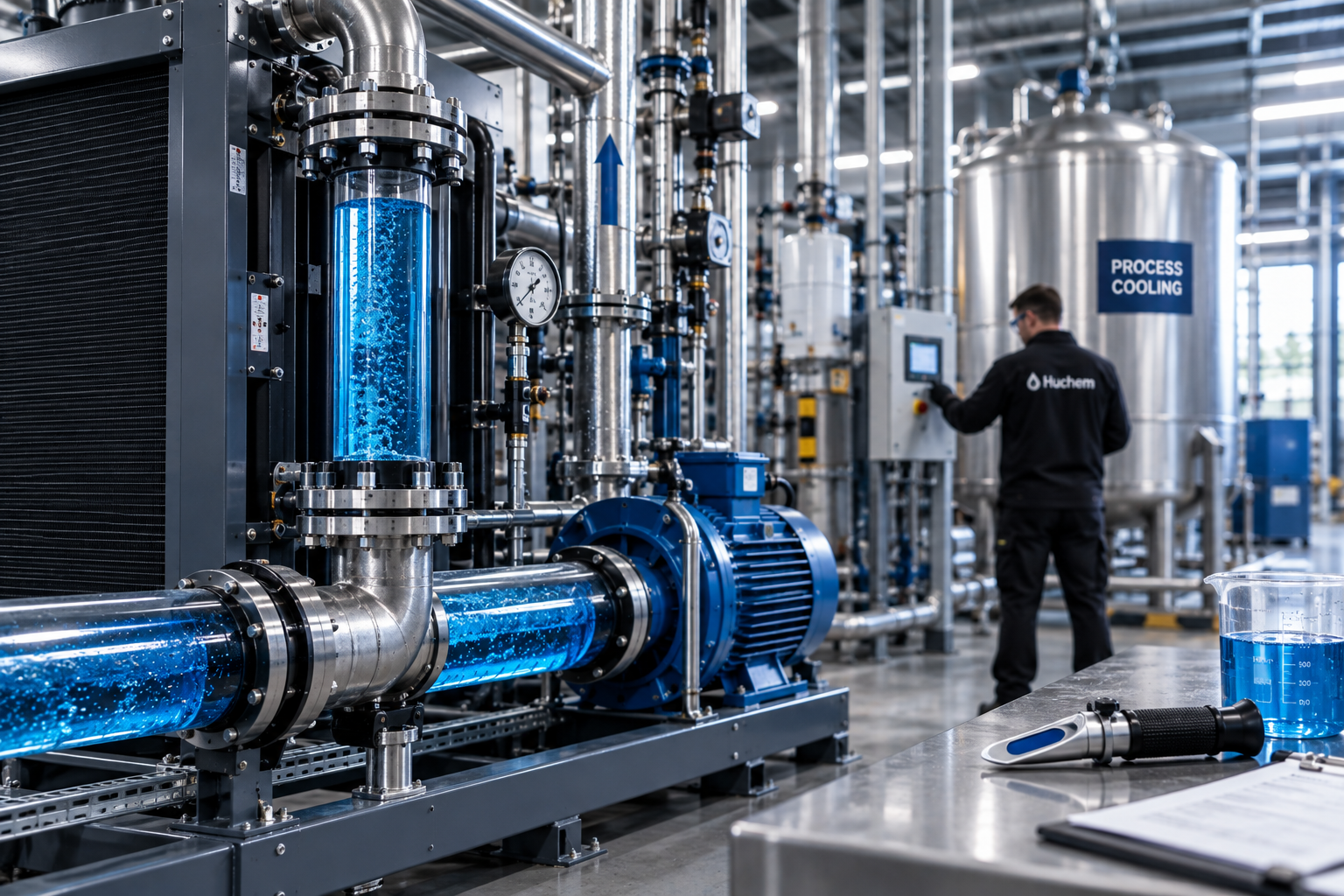
The quality of the coolant largely determines the lifespan of a cooling installation. Good glycol coolant not only extends the life of the system but also reduces the risk of breakdowns and downtime. Here are five practical tips for keeping your glycol system in good condition.
Coolant carries away the heat generated in industrial processes and keeps the installation at the right temperature. For a long service life the quality of the coolant is of great importance. A high quality glycol coolant extends the lifespan of the system and reduces the chance of faults, so the installation has to be shut down less often. What should you pay attention to?
Tip 1: use high quality water
The water in your coolant must be well purified and meet the requirements of the equipment manufacturer. We recommend demineralised water or water purified by reverse osmosis. In demineralised water all inorganic salts and most organic matter have been removed. The water is free of lime, so no scale forms on the heat exchanger.
Tap water is strongly discouraged. Mains and ground water contain minerals, salts and other matter that cause scale, corrosion and deposits, with shorter component life and more maintenance as a result. Deionised water is fine for the first fill but not recommended for topping up, because it can attack the metals in the system, unless the manufacturer has specifically designed the unit for it. Check first.
Tip 2: never mix different glycols
Never mix different types of glycol, or glycols from different brands. The inhibitor packages can react with each other and form a precipitate. This precipitate no longer contributes to cooling but does clog the filter and reduce the flow rate of the coolant. If you switch glycols, flush and clean the installation thoroughly first. Use a glycol refractometer to determine which type and concentration is currently in your system.
Tip 3: do not use automotive coolant
Coolants for cars and engines are designed for the automotive sector and often contain silicates. In an engine the silicate protects against rust, but in an industrial installation it does damage: it coats the heat exchanger, damages the mechanical seal of the pump and forms a gel like layer on the pipework that reduces flow. Always use a glycol that is formulated for industrial heating and cooling systems.
Tip 4: filter the coolant
Clean process water and the correct glycol concentration are essential, but the coolant also needs to be maintained. Many chillers are supplied with a fluid filter. If yours is not, we strongly recommend installing a filter system. It removes dust and debris from the coolant and protects the installation against deposits, blockages and damage to components.
Tip 5: dispose of used coolant correctly
Because of the glycol content, used coolant is classed as hazardous waste and strict rules apply to its disposal. Never pour used coolant down the drain. It is harmful to people, animals and aquatic life, and incorrect disposal can result in fines and prosecution. Use a licensed waste contractor and keep the documentation for your records.
Bonus tip: check the concentration every year
Test the frost protection of your system every autumn with a refractometer. Top up with 100% glycol if the protection has dropped, and replace the fluid completely if it has become dark, acidic or contaminated.
Huchem supplies inhibited ethylene glycol and propylene glycol in 30%, 40%, 50% and 100% in 20 litre cans, with larger volumes available on request. Do you have questions about your installation? Contact us, we are happy to help.